DraftCall
DraftCallFantasy Football

Head to Head

Updated from live stats

Austin Hooper vs David NjokuWho should you start in 2026 fantasy football?

David Njoku is the better fantasy start for 2026, averaging 6.3 PPG to Austin Hooper's 4.0 in 2025. Full head to head breakdown below.

The Bottom Line

David Njoku is the better fantasy play this season.

David Njoku has the edge, but it is not a runaway. The 2.3-PPG advantage is real (6.3 to 4.0), and David Njoku's 4 touchdowns show scoring upside. Austin Hooper is the buy-low candidate if recent production has dipped, because the talent gap is smaller than the numbers suggest.

Moderate confidence: stats favor the leader, but matchup variance could flip this weekly.

Want this verdict updated live on Sunday?

Track Austin Hooper and David Njoku in the DraftCall app and get their updates the moment they change.

Get the App
TENew England Patriots#99
Austin Hooper
PPG
4.0
Games
15
Rec
32
Rec Yds
292
Rec TDs
1
Targets
42
Bye
Week 14
TECleveland Browns#26PPG LEADER
David Njoku
PPG
6.3
Games
11
Rec
33
Rec Yds
293
Rec TDs
4
Targets
48
Bye
Week 11

The Edge Chart

VolumeEfficiencyTD UpsideFloorCeilingDurability
Austin Hooper
David Njoku

Head to Head

4.0 PPG6.3 PPG
15 GP11 GP
Bye: Week 14Bye: Week 11

Fantasy Tiers

Austin Hooper: Tier 5 (Deep League) TE (ranked #99 at the position). David Njoku: Tier 4 (Bench/Bye Fill) TE (ranked #26 at the position). Among the top 30 tight ends this season, Austin Hooper is producing at 18% of elite pace and David Njoku at 29%. That ranking gap means David Njoku carries more trade value and a higher draft cost in 2026.

Austin Hooper vs David Njoku: The Full Breakdown

Two tight ends who will land on plenty of the same rosters in 2026. Austin Hooper (New England Patriots) finished the 2025 season averaging 4.0 fantasy points per game in 15 games. David Njoku (Cleveland Browns) came in at 6.3 PPG over 11 games. The gap is real but not insurmountable with the right matchup.

David Njoku carries a 2.3-point PPG advantage from the 2025 season. That baseline matters, but it is one input among several. Matchup difficulty, scoring trends, and injury reports move the needle week to week, which is why the best answer changes depending on when you are asking.

Both see steady target volume for the tight end position. Austin Hooper had 32 catches for 292 yards; David Njoku posted 33 for 293. At a position where most starters barely clear 7 PPG, this class of tight end is where the fantasy advantage lives week to week.

Bye weeks matter for roster construction: Austin Hooper sits Week 14 while David Njoku is off Week 11. If you are deciding between the two as a season-long roster hold, the staggered byes actually work in your favor.

Trade Value + Dynasty Outlook

Both are in a similar trade value range. A straight swap would be fair in most leagues, with the tiebreaker going to whichever manager values schedule or bye week more. Dynasty outlook: Austin Hooper (age 27) is in the middle of his productive window. Stable dynasty value. David Njoku (age 29) is in the middle of his productive window. Stable dynasty value.

Did You Know?

  • David Njoku outscored Austin Hooper by a projected 39 total fantasy points over a full 17-game season.
  • Austin Hooper played 15 games in 2025 compared to David Njoku's 11. That durability gap means Austin Hooper contributed more total fantasy points even before you look at per-game averages.
  • David Njoku scored 4 total touchdowns in 2025 (0.4 per game), making him one of the more reliable scoring options at tight end.
  • David Njoku saw 48 targets in 2025. Target volume is the single strongest predictor of weekly PPR production at the tight end position.

Detailed Stat Breakdown

Austin Hooper vs David Njoku: 2025 fantasy football stat comparison in the half-PPR scoring format.
StatAustin HooperDavid Njoku
PPG (Half-PPR)4.06.3
Games Played1511
Total Fantasy Pts (est.)6069
Receptions3233
Rec/Game2.13.0
Receiving Yards292293
Rec Yds/Game19.526.6
Receiving TDs14
Targets4248
Target Share/Game2.84.4
Age-29
Experience-8 yrs
Bye WeekWeek 14Week 11

Summary

Based on 2025 production, David Njoku holds the PPG edge with low-end output at 6.3 points per game. Austin Hooper averaged 4.0 PPG. Season averages are a starting point, not the final word. For a full AI analysis factoring matchup quality, recent form, injury impact, and game script, download DraftCall and get a verdict backed by real data.

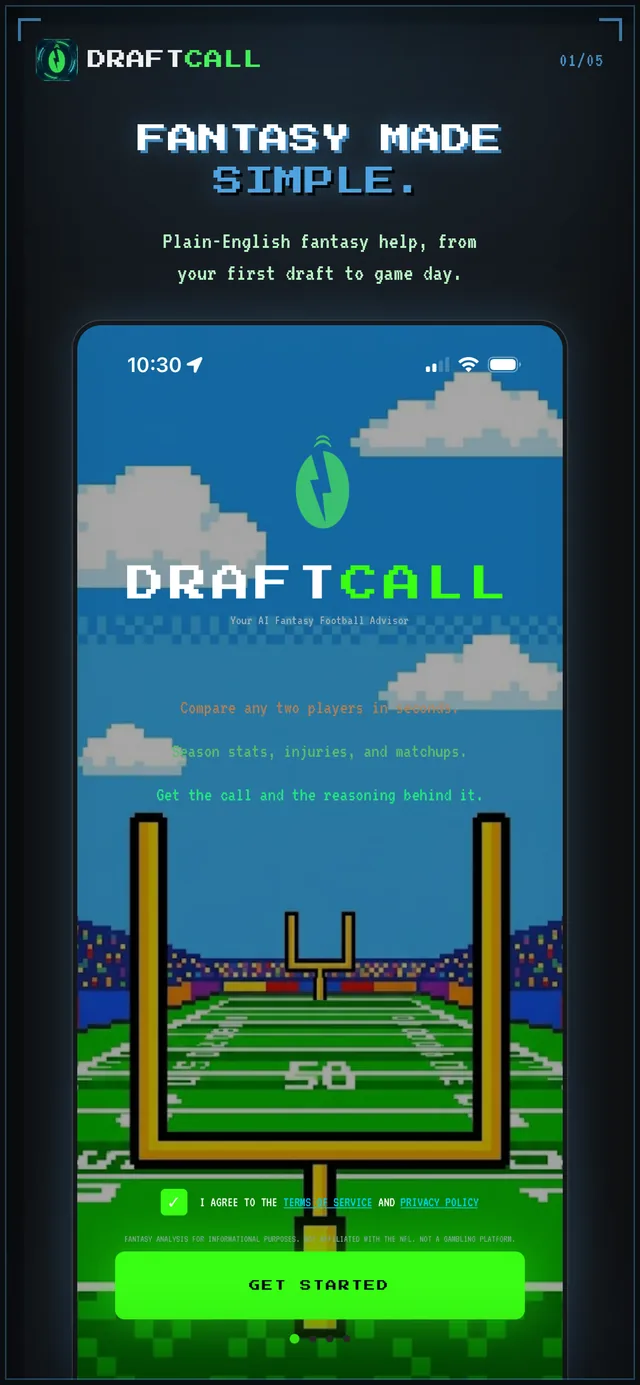
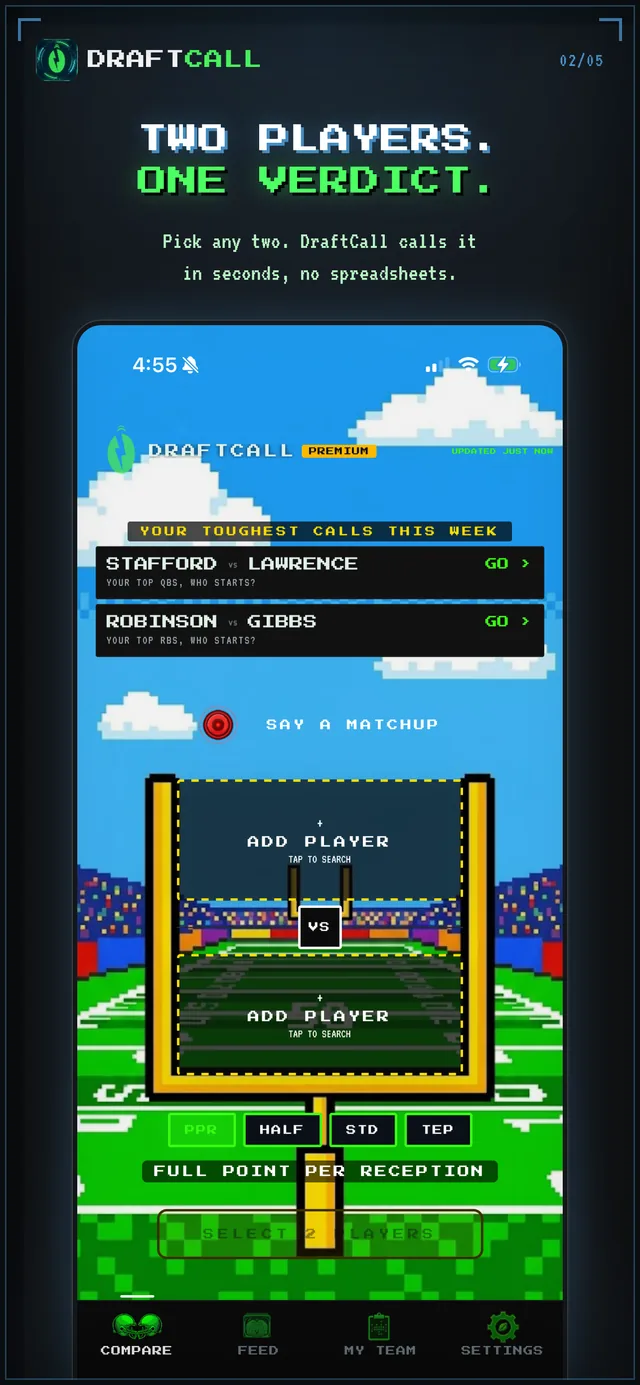
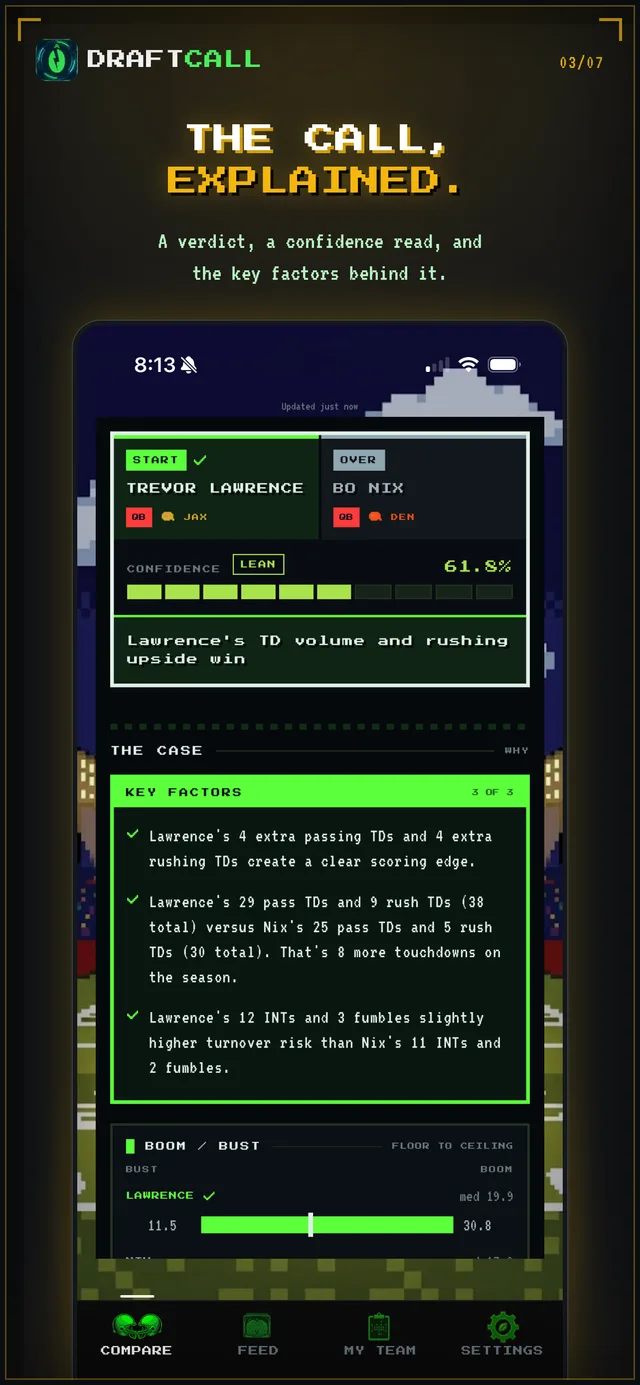
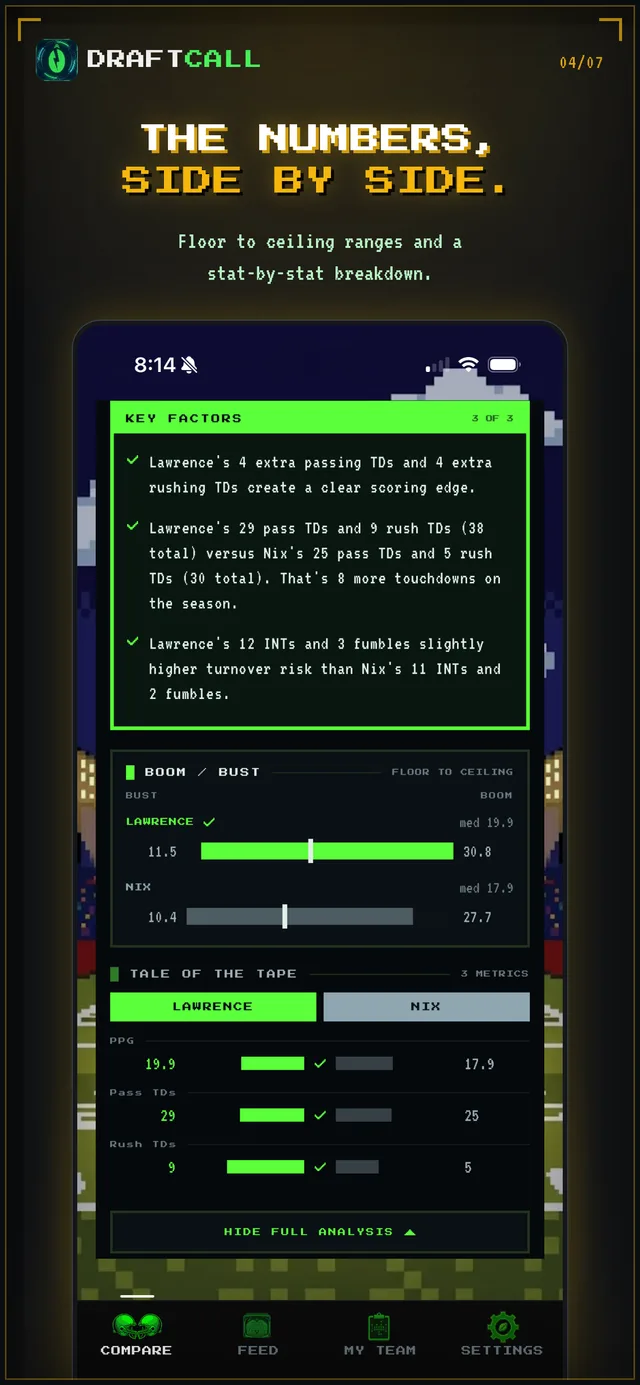
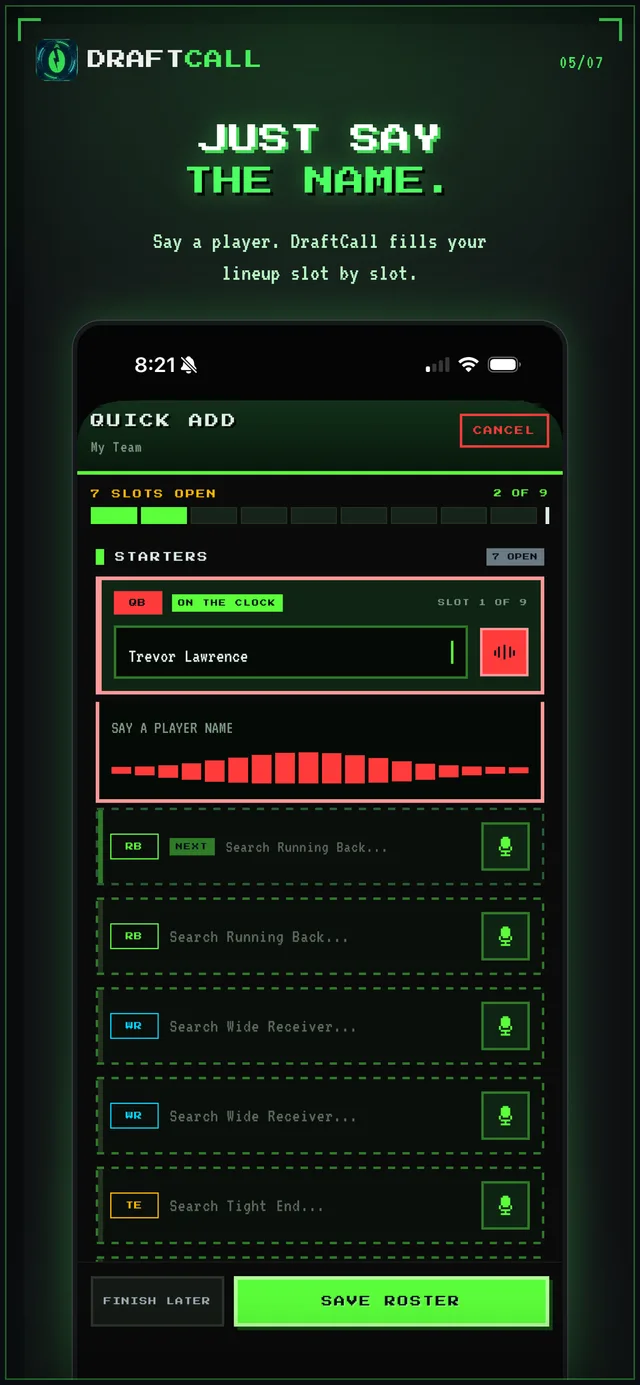
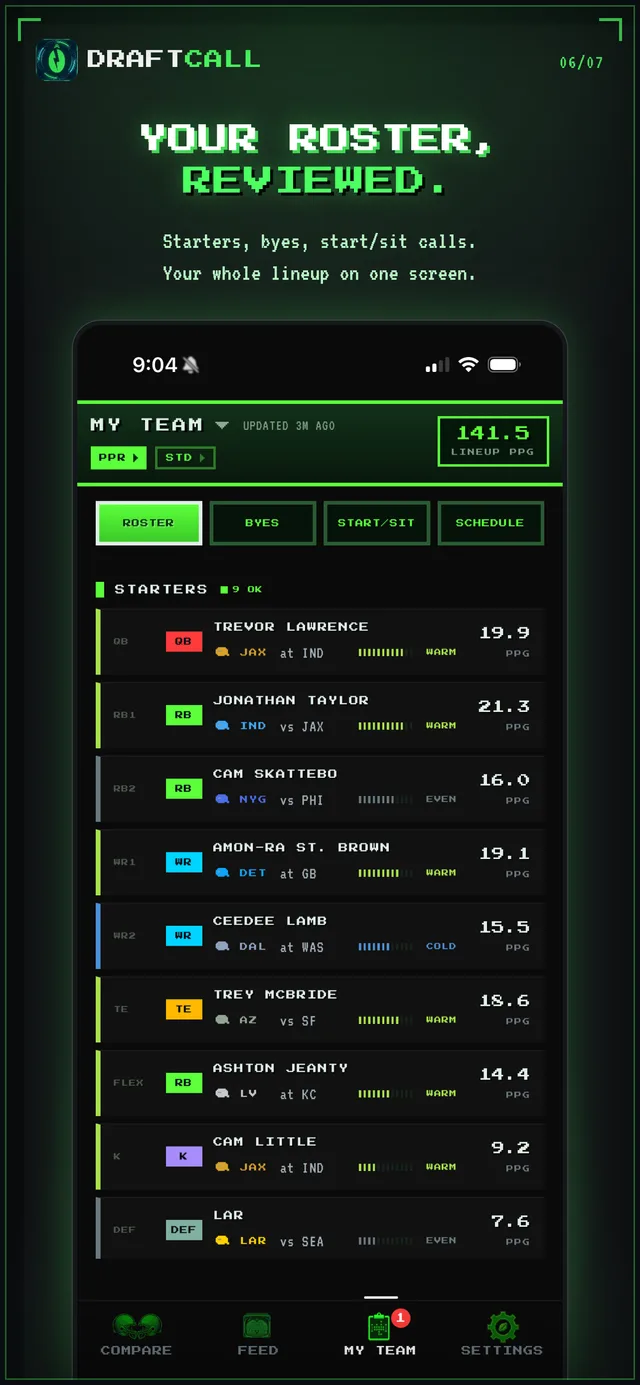
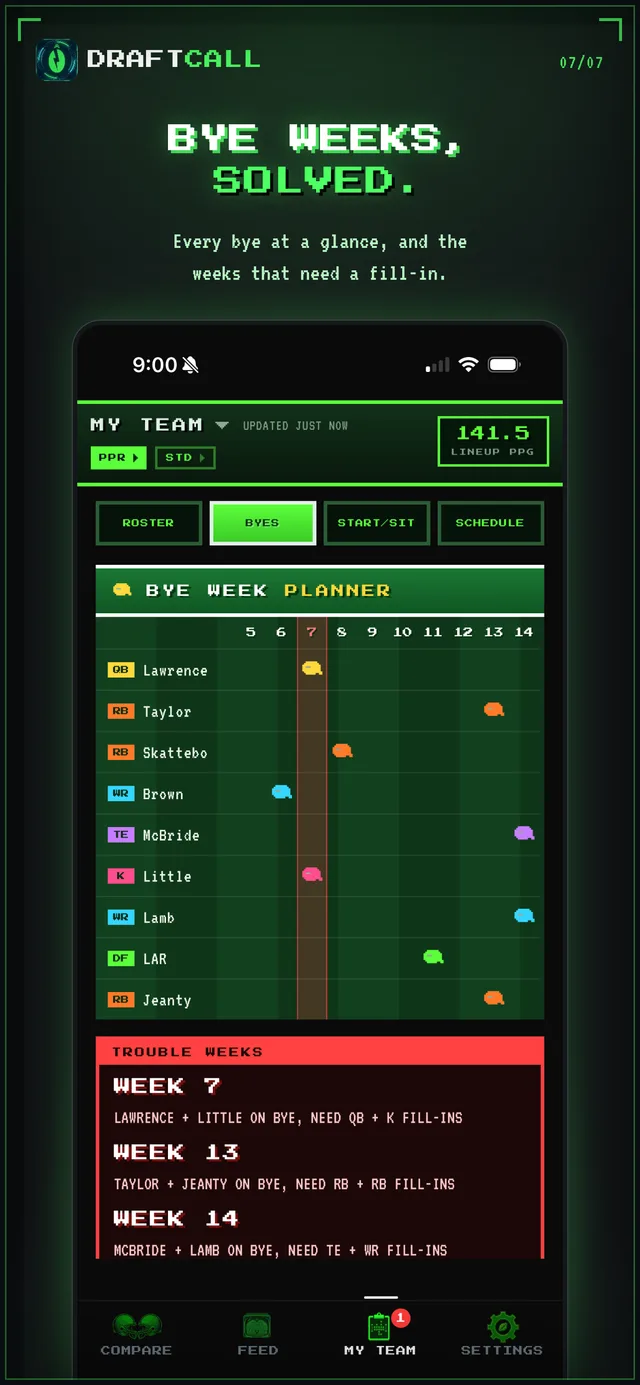
DraftCall app on iPhone

Website vs App

Get the AI verdict on Austin Hooper vs David Njoku

DraftCall's AI analyzes matchup quality, recent trends, injury impact, and game script to give you a clear start/sit recommendation.

See everything in the app →

Launch List

Get the live verdict on Austin Hooper vs David Njoku

The DraftCall app delivers live game-day verdicts on every matchup. Join the launch list and we will email you the day it goes live for the 2026 NFL season, with your direct iOS and Android install links.

We will never share your email. Unsubscribe anytime.

Frequently Asked Questions

Should I start Austin Hooper or David Njoku in fantasy football?

Based on 2025 season averages, David Njoku has the edge at 6.3 PPG compared to Austin Hooper's 4.0 PPG. However, the best start depends on weekly matchup, recent form, and injury status. DraftCall's app provides real-time AI-powered verdicts that factor in all of these variables.

How many fantasy points did Austin Hooper and David Njoku average in 2025?

Austin Hooper averaged 4.0 fantasy points per game (half-PPR) across 15 games in 2025. David Njoku averaged 6.3 PPG over 11 games. That is a difference of 2.3 points per game.

When are Austin Hooper and David Njoku's bye weeks in 2026?

Austin Hooper (NE) has a bye in Week 14, and David Njoku (CLE) has a bye in Week 11. Plan your roster accordingly if you are carrying both players.

Is Austin Hooper or David Njoku a better fantasy tight end in 2026?

David Njoku outscored Austin Hooper by 2.3 PPG in 2025, which gives him the edge heading into 2026. For a week-by-week verdict, DraftCall's AI analyzes matchup quality and recent trends in real time.