

DraftCall
DraftCallFantasy Football
Chapter 6 of 6

Chapter 6 · Fantasy Football 101

Common Fantasy Football Mistakes to Avoid

The seven rookie mistakes that lose more leagues than anything else.

Every fantasy football league has a handful of managers who play great fantasy football and a bunch who do not. The difference is almost never about knowing more stats or watching more tape — it is about avoiding the same handful of unforced errors that come up every year. This chapter is a straightforward list of those errors with the reasoning behind why they hurt you.

If you read this chapter and commit to not making any of these mistakes, you will automatically play better fantasy football than 60-70% of your league. That is not an exaggeration — most of these errors are so common and so avoidable that just recognizing them puts you ahead.
Drafting a quarterback too early

In a single-QB league, quarterback is the deepest fantasy position. The 15th-best QB in any given year is usually within 3-5 points per game of the 5th-best QB. That means waiting until round 9 or 10 for a QB costs you very little compared to reaching for one in round 4 or 5, where you could have instead drafted a top-tier running back or alpha receiver.

The exception is if you have a clear shot at an elite dual-threat quarterback in a round where RB/WR value has dropped off. In those cases, a mobile QB's rushing floor can make him genuinely worth a top-four-round pick. But that is the exception, not the rule.

In superflex leagues, where you can start two QBs, the math flips completely. Getting two starting-caliber QBs in your first five picks is usually essential. Know which format you are in before drafting — it completely changes the position's value.

Chasing last week's points

A rookie wide receiver has his first big game and posts 25 fantasy points. He is all over the headlines. You notice him on the waiver wire and pick him up, drop your disappointing RB3 to make room, and start him next week with high expectations. The next week, he catches three passes for 40 yards.

This is "chasing points" and it is the most common in-season trap. One-week spikes are usually unsustainable, especially from unproven players. Look at snap share, target share, and role trend over three or four games before making a permanent roster change. A single boom week is noise, not signal.

The same trap works in reverse. A reliable starter has one bad week (10 points when he usually scores 15) and the temptation is to bench him or trade him for pennies. Do not. Great players have off weeks all the time. Stick with the guys you drafted unless the role itself has changed.

Ignoring bye weeks

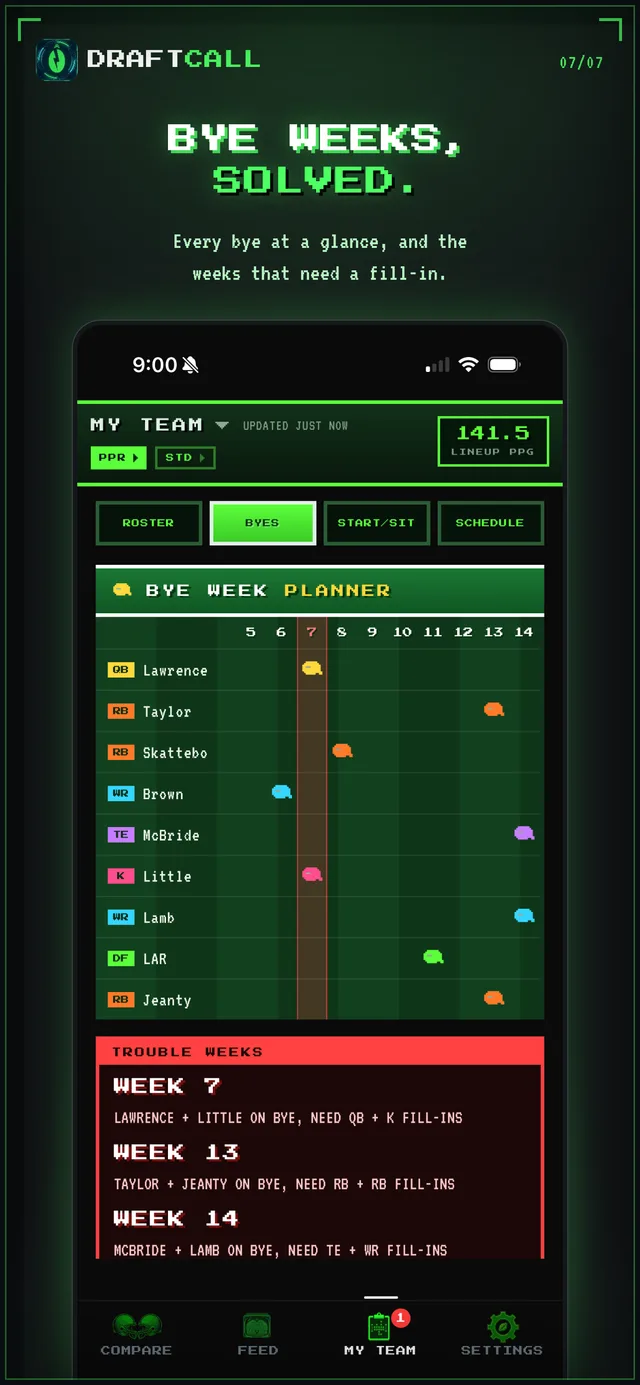
Every NFL team has one off week during the season. Players on that team score zero fantasy points in their bye week. If you stack too many players on the same bye, you are guaranteeing yourself a brutal Sunday mid-season.

Most platforms show you your upcoming bye week load, and smart managers plan for bye crunches weeks in advance. If you see that Week 10 is going to be a disaster, start prospecting on the waiver wire in Week 8 — you need one or two fill-in starters in place before your bye week actually hits.

This is doubly important at shallow positions like tight end and kicker. If your starting TE is on bye in Week 7, you need a plan by Week 5 at the latest. Waiting until Week 7 to find a fill-in means you are getting the scraps nobody else wanted.

Dropping injured starters too soon

A star running back gets hurt and is ruled out for a few weeks. Your instinct is to drop him for a waiver-wire fill-in you can start right away. Do not. Injured starters retain most of their value when they come back, and dropping them means another manager can grab him for free and reap the reward when he returns.

The correct move is to stash the injured starter on your bench and pick up a short-term fill-in to start in the meantime. You might need to cut a different bench player — someone with less long-term upside. Keeping a hurt stud on the bench for 3-4 weeks is almost always the right call unless your team is on the brink and you need every active player you can roster.

The only time to drop an injured player is when the injury is season-ending (ACL, major shoulder surgery, severe turf toe). Those updates usually come out within 24 hours of the injury. If it is not season-ending, be patient.

Over-thinking start/sit decisions

Some fantasy managers agonize over every FLEX decision, flip-flopping their lineup three times before kickoff. This is a losing strategy. At worst, you talk yourself into benching your best player. At best, you waste mental energy that should be going toward more impactful decisions.

Use a simple rule: start your best players. If you have an established WR2 with a bad matchup and an unproven rookie with a great matchup, start the WR2. Track record beats projection in close calls, especially for beginners who are still learning how to read matchups. Over a full season, betting on proven talent wins more weeks than chasing upside.

Save your decision-making energy for the truly close calls and the waiver wire. Those are the spots where the thinking matters. Your WR1 goes in your starting lineup every week — that is not a decision, it is a default.

Trading out of frustration

You lose a tough Week 3 game where your RB1 scored three points. You are tilted. You immediately open the trade menu and offer your RB1 plus a WR2 for a slightly lower-ranked RB and a throwaway bench piece. This is frustration trading and it is how managers lose leagues in September.

Never make a trade within 24 hours of a bad loss. The emotional component is too strong and you will almost always accept an unfavorable deal. Wait until Tuesday or Wednesday when your brain is back online, and re-evaluate whether the trade still makes sense. Nine times out of ten, it will not.

The same goes for dropping players. If you want to drop a player on Sunday night because he just gave you a stinker, wait 48 hours. On Tuesday, look at his usage numbers and decide if the game was a blip or a trend. Most of the time it was a blip, and you will thank yourself for not cutting him.

Forgetting to set your lineup

This is the worst way to lose a fantasy week, and it happens more than any other mistake on this list. You forget to update your lineup after a Thursday night game. Your RB who is ruled out on Saturday is still in your starting slot on Sunday. You score zero at a position and lose the week by a margin you could have avoided with 30 seconds of attention.

Set a recurring calendar reminder for Sunday morning at 10 AM Eastern. That is about 90 minutes before the early slate kicks off, and it gives you enough time to check injury reports, swap out inactive players, and make final adjustments. Every serious fantasy manager has this on their calendar.

Most platforms will let you set default lineup preferences — auto-start a bench player if your starter is ruled out inactive. Turn that on. It will not save you from every mistake, but it will catch the obvious cases where you forget to do anything at all.

Glossary Terms From This Chapter

Website vs App

Put it into action

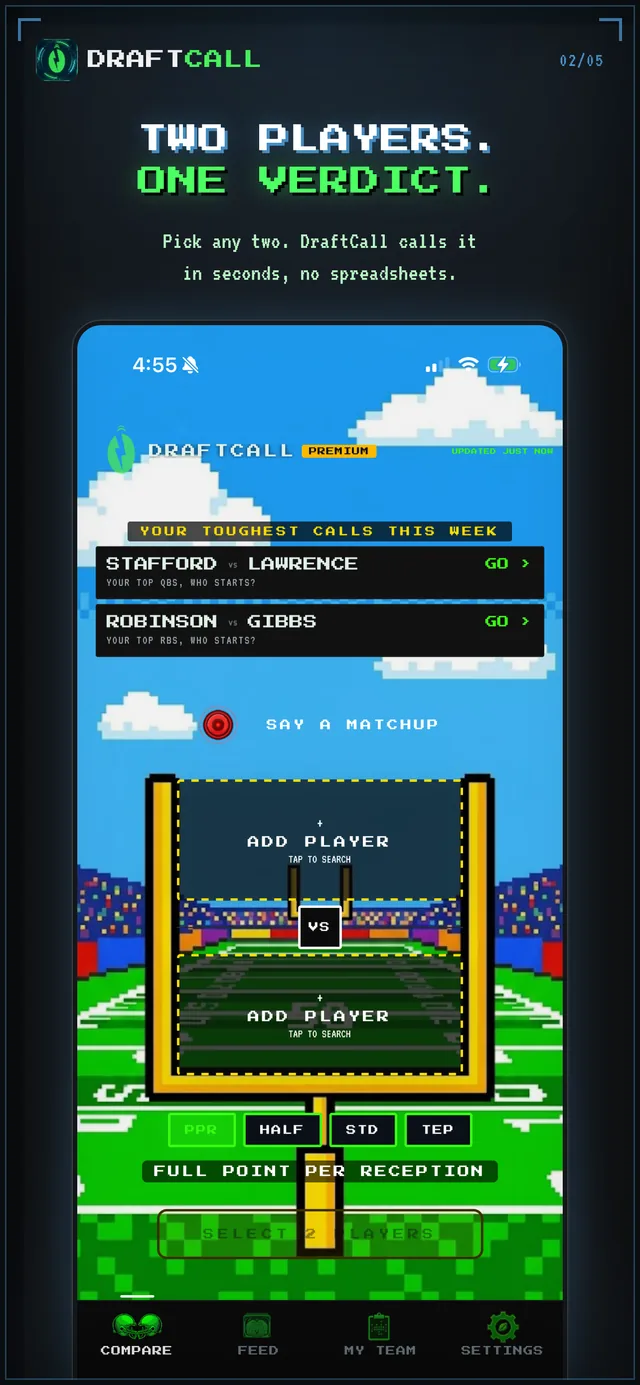
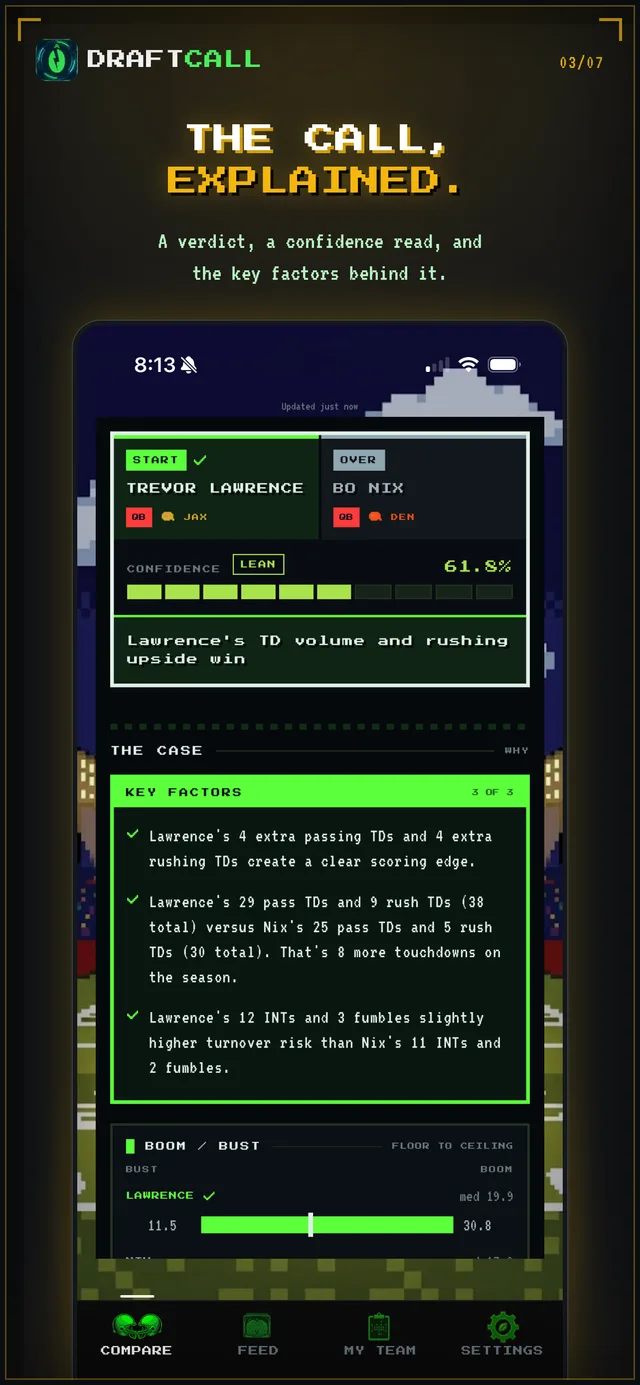
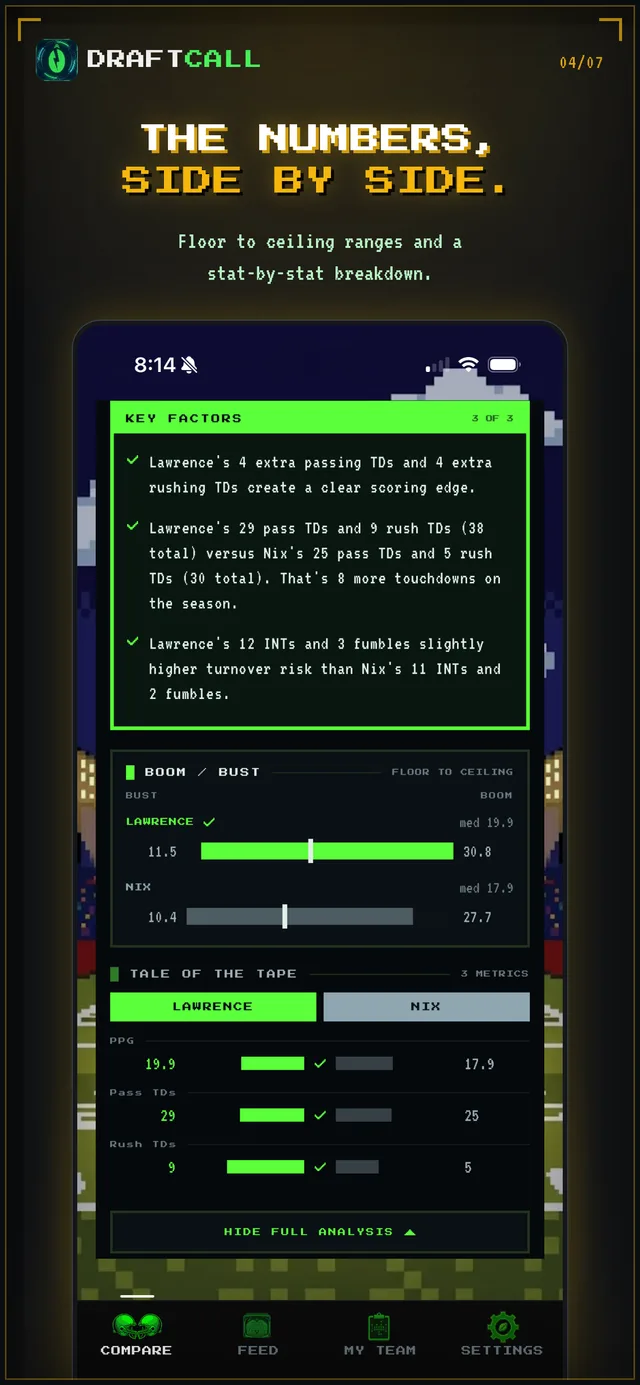
DraftCall's AI comparison engine gives you clear start/sit verdicts in seconds, so the knowledge from this chapter turns into real fantasy wins.

See everything in the app →