

DraftCall
DraftCallFantasy Football
Chapter 1 of 6

Chapter 1 · Fantasy Football 101

How Fantasy Football Works: The Absolute Basics

What fantasy football is, how it works, and why real NFL stats decide your week.

Fantasy football is a game you play with your friends using real NFL players. You draft a team of actual NFL stars at the start of the season, your roster earns points every Sunday based on what those players do in their real games, and you compete head-to-head against another team in your league each week. The team with the most points wins that week.

The entire experience runs on top of the real NFL season. When Josh Allen throws a 40-yard touchdown on Sunday afternoon, everyone in your fantasy league who drafted him gets points for it. When Christian McCaffrey gets tackled in the backfield on a Monday night goal-line stand, your fantasy team feels that too. You are not rooting for a single NFL team anymore — you are rooting for a hand-picked collection of players spread across the entire league.

This chapter walks through the foundational pieces: how a roster is built, how points are earned, how the season flows, and what the different league formats are. Everything else in this guide builds on top of these basics, so it is worth spending a few minutes here even if you think you already know the game.

What is fantasy football, exactly?

Fantasy football is a season-long competition where you act as the general manager of a make-believe NFL team. Instead of just cheering for one NFL franchise, you assemble your own lineup by picking real players from any team in the league. Those players earn you points based on their actual on-field performance every week.

You join a league, usually with 8, 10, or 12 other people. Leagues are commonly made up of friends, coworkers, family members, or random strangers matched online. Every league has its own rules, its own scoring system, and its own commissioner who handles disputes. The fun comes from the combination of skill (drafting well, managing your roster) and luck (injuries, blowouts, weather).

There are dozens of fantasy football platforms to play on. The most popular are ESPN, Yahoo Fantasy, Sleeper, and NFL Fantasy. They all work roughly the same way and charge nothing for a basic league. You spend about an hour drafting before the season starts, then 5-10 minutes a week during the season setting your lineup and watching the games. That is the entire commitment.

Your fantasy roster

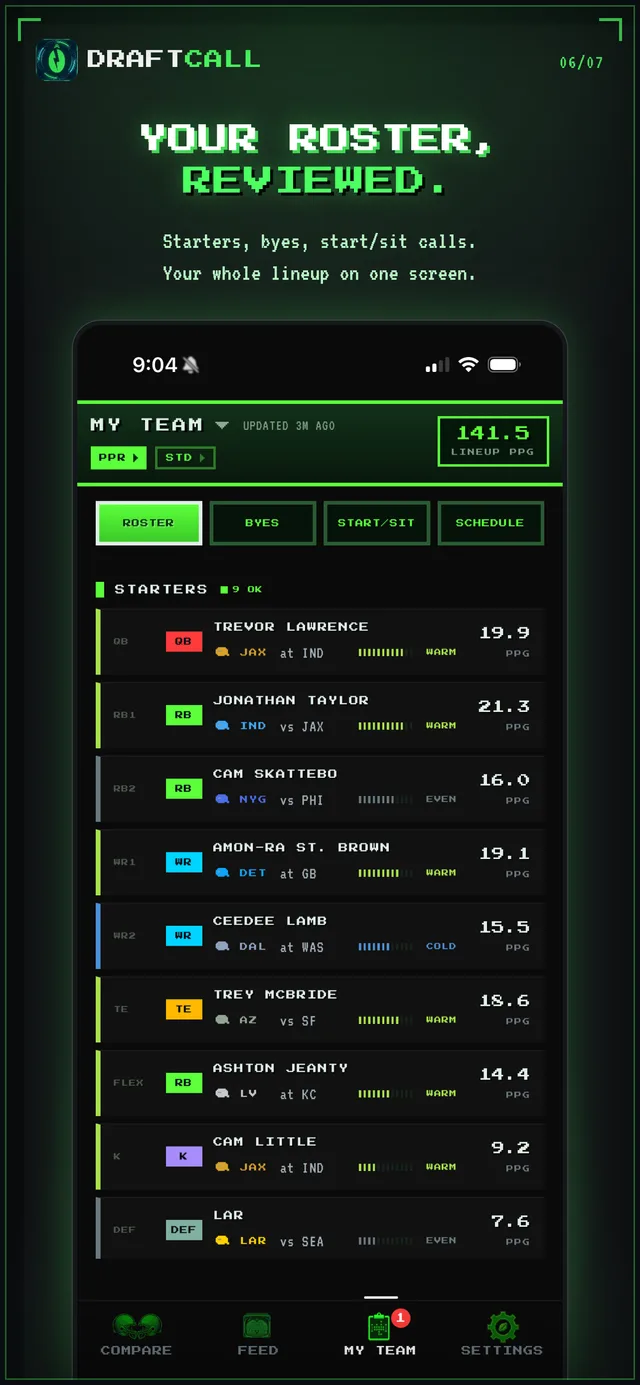
A typical fantasy roster holds 15-16 NFL players. Of those, you start about 9 players every week and keep the rest on your bench as backups and injury insurance. The specific starting positions vary slightly by league, but the standard lineup looks something like this: one quarterback (QB), two running backs (RB), two or three wide receivers (WR), one tight end (TE), one FLEX (any RB/WR/TE), one kicker (K), and one team defense (DEF).

The FLEX slot is what makes fantasy lineups interesting. Because it accepts any running back, wide receiver, or tight end, you get to decide every week which position gives you the best matchup. A third running back, a third wide receiver, or a second tight end all work, and that choice is often what separates a winning week from a loss.

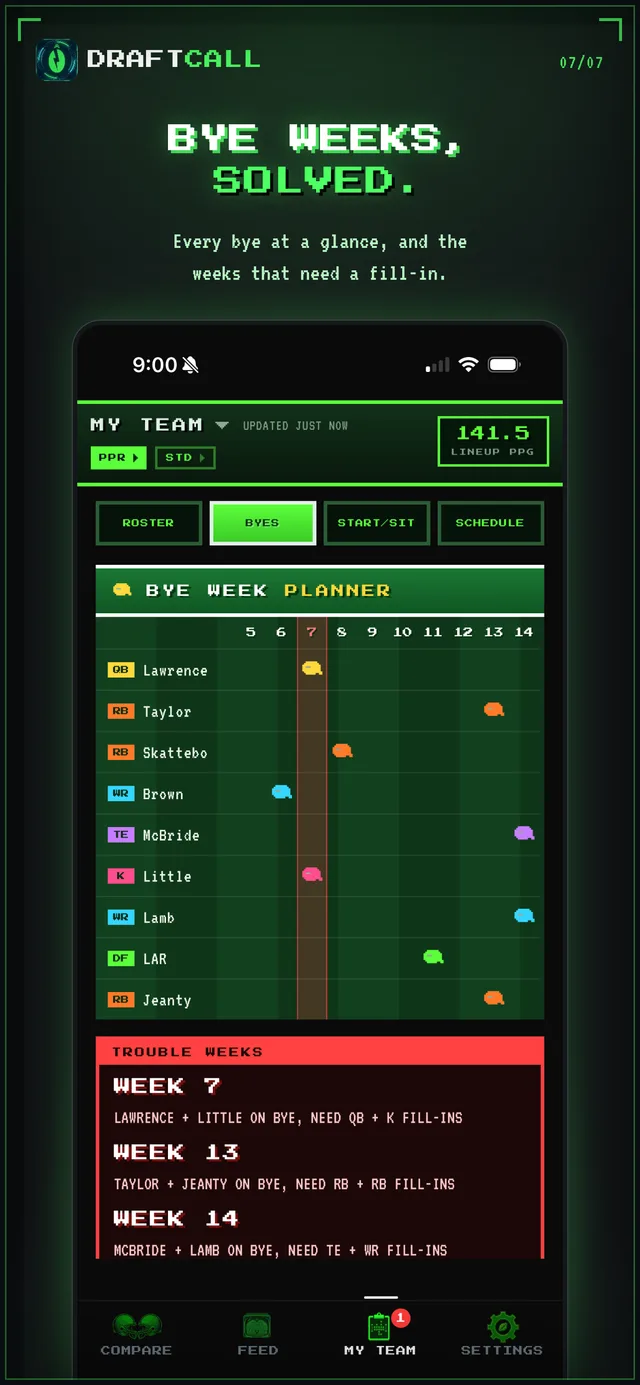
Your bench holds 5-7 players you are not starting that week. Bench players do not score for you, but they exist so you can rotate players in and out as matchups, injuries, and bye weeks demand. Smart roster management during the season is mostly about making the right bench decisions.

How scoring works

Every statistical thing a player does in a real NFL game translates into a specific number of fantasy points. A passing yard is worth 1/25th of a point. A rushing or receiving yard is worth 1/10th of a point. A passing touchdown is usually 4 points. A rushing or receiving touchdown is 6 points. A reception (in PPR leagues) is worth 0.5 or 1.0 points depending on format. Interceptions and fumbles cost you points.

All those numbers add up across your starting lineup on Sunday. If your nine starters combine for 127 points and your opponent's nine starters combine for 119 points, you win that week. Over the course of the regular season, the teams with the most wins (or the most total points, in some leagues) make the playoffs, which usually run from Week 15 to Week 17.

The specific scoring system matters enormously for draft strategy. A player who catches 100 balls a year is worth a lot more in a PPR (Points Per Reception) league than in a standard (no reception bonus) league. A rushing quarterback is worth more than a pocket passer because those rushing yards pay out exactly like a running back's yards. Know your league's scoring before you draft, not during.

The fantasy football season

A fantasy season starts with the draft, usually held in late August or the first week of September — just before the real NFL season kicks off. Everyone in your league shows up (in person or online), and you take turns picking players one by one until every roster is full. This usually takes about an hour and a half and is the most fun part of fantasy football.

Once the season starts, you play a weekly head-to-head matchup against a different opponent in your league. Monday night you check the final scores, wake up Tuesday, and start prepping for next week's matchup. You set your lineup by the start of Sunday's early games, pick up a player or two off the waiver wire, and maybe pull off a trade. This cycle repeats for 13-14 weeks.

After the regular season ends, the top 4 or 6 teams in your league make the fantasy playoffs. Those playoffs usually run through Weeks 15, 16, and 17 of the real NFL season (NFL Week 18 is often excluded because many starters rest for the real playoffs). The fantasy champion gets bragging rights and, in many leagues, a prize pool the league members chipped into before the season.

League formats you might encounter

Most beginner leagues are what we call "redraft" leagues. Every season starts fresh with a new draft. Nobody keeps their players from year to year. Redraft is the simplest format and the best way to learn the game.

Keeper leagues let you retain a small number of players (usually 1-4) from the prior year before the new draft starts. This adds a long-term element without going full dynasty. Dynasty leagues take it further — you keep your entire roster forever and only draft incoming rookies each year. Dynasty is much more complex and is usually a commitment of many seasons. Start with redraft first.

Bestball leagues are a newer variation where you draft a deep roster and never touch it again. Your lineup auto-sets each week by picking your highest-scoring players. There are no waivers, no trades, and no weekly decisions. It is popular for people who want the draft excitement without the in-season grind.

Glossary Terms From This Chapter

Website vs App

Put it into action

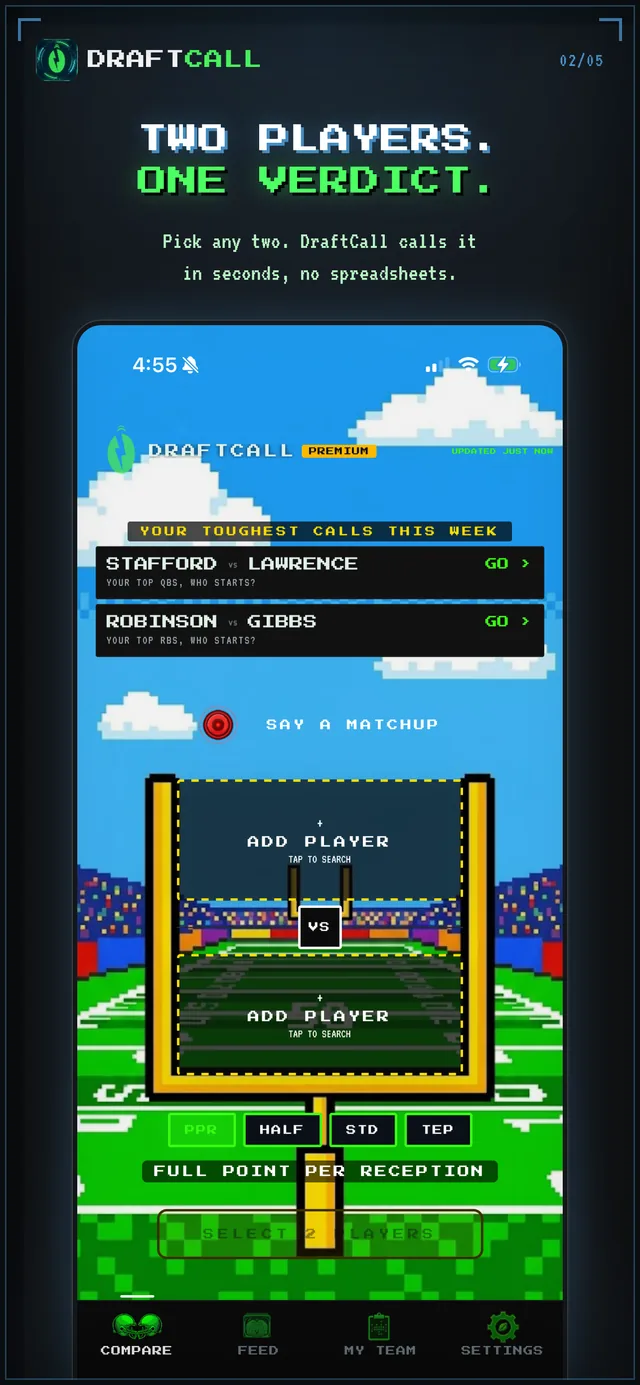
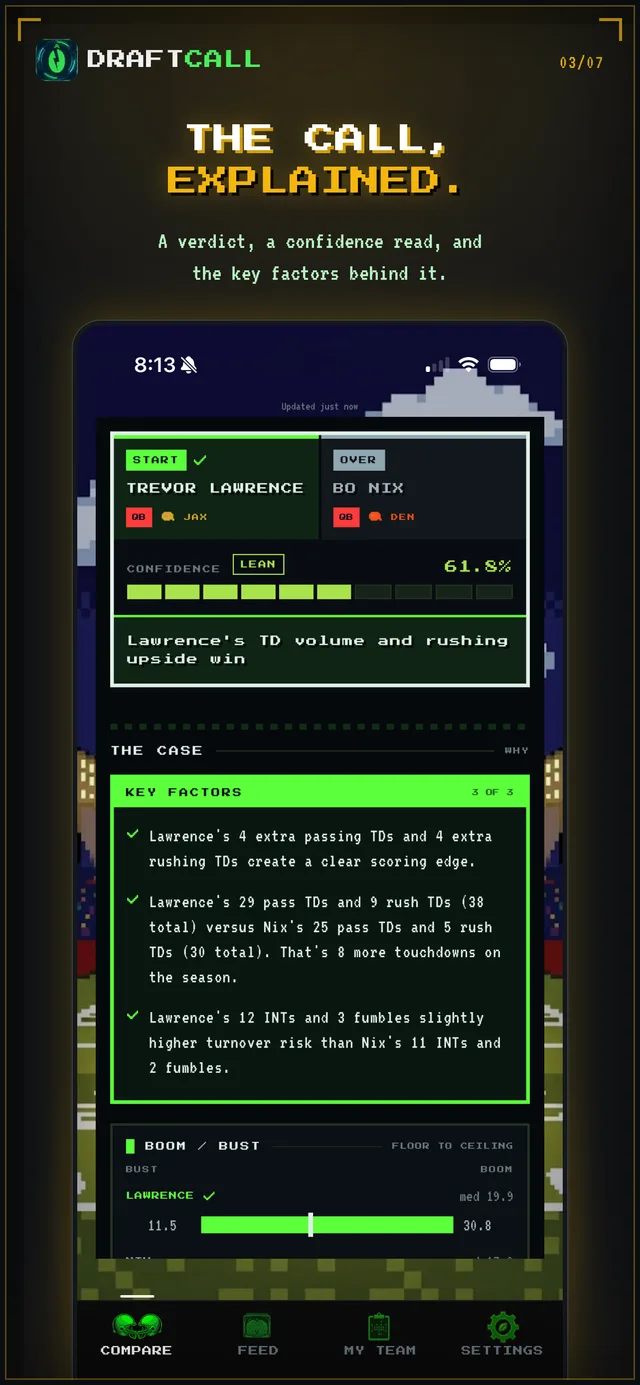
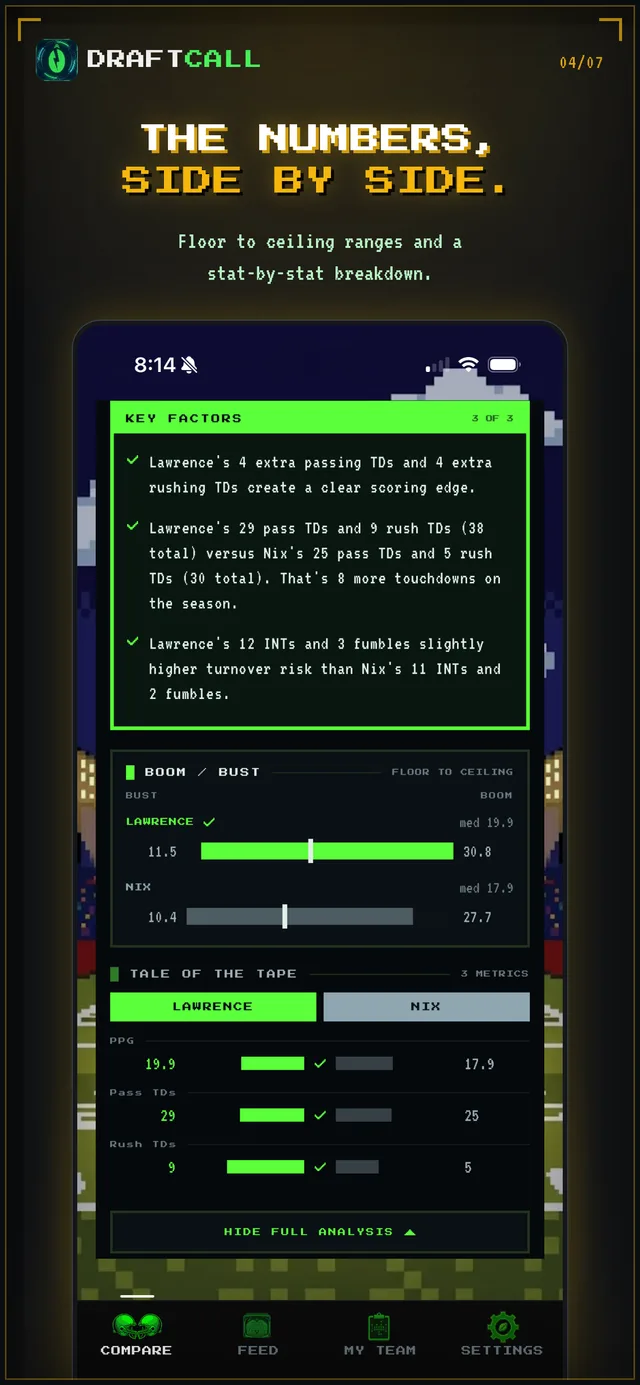
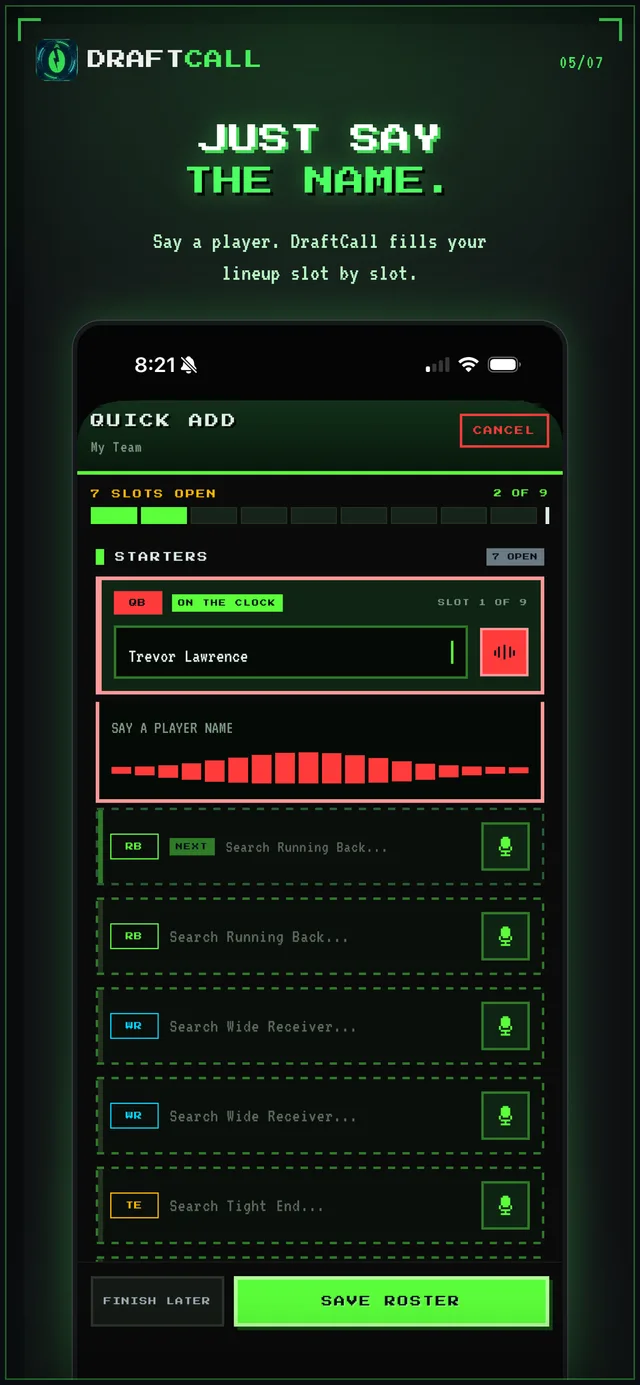
DraftCall's AI comparison engine gives you clear start/sit verdicts in seconds, so the knowledge from this chapter turns into real fantasy wins.

See everything in the app →