

DraftCall
DraftCallFantasy Football
Chapter 2 of 6

Chapter 2 · Fantasy Football 101

Fantasy Football Scoring Explained

PPR, half-PPR, standard, and bonus scoring broken down with real examples.

Scoring is the engine that makes fantasy football work, and it is the single most important rule to understand before your first draft. Your league's scoring settings determine which players are valuable, which are overrated, and which strategies make sense at each position. Two fantasy leagues with identical player pools can produce completely different winners because of nothing more than how many points a reception is worth.

This chapter walks through every major scoring category, explains the three main league formats (PPR, half-PPR, and standard), and shows you how to read a scoring page on any fantasy platform. If you only read one chapter of this guide before your first draft, make it this one.


The basic building blocks

Every fantasy scoring system starts with the same foundation: yards and touchdowns. A passing yard is worth 0.04 fantasy points in almost every league, which means a 300-yard passing game pays out 12 points before any touchdowns are added. A rushing or receiving yard is worth 0.10 points, so a 100-yard rushing game pays out 10 points. These conversions are standard everywhere.

Touchdowns are where the big points come from. A rushing or receiving touchdown is almost always worth 6 points. A passing touchdown is usually 4 points, though some leagues pay out 6 on those too. Field goals are worth 3 points for kickers (plus bonuses for long kicks). Extra points are 1 point. Two-point conversions are 2 points for the player who scores them.

Then there are the penalties. Interceptions thrown by your quarterback cost 2 points. Fumbles lost cost 2 points. These penalties are part of the reason a boom-and-bust quarterback can have a high average score but still bust his fantasy week when he has a three-interception game.

PPR, half-PPR, and standard — the three main formats

The single biggest scoring variable in fantasy football is how your league treats receptions. In a standard (also called "non-PPR") league, a reception by itself is worth zero points. The receiver only gets credit for the yards and any touchdown. In a full PPR (Points Per Reception) league, every reception is worth one full fantasy point on top of the yards and touchdown. Half-PPR splits the difference — each catch is worth half a point.

This sounds like a small difference, but it completely reshapes the player rankings. A receiver who catches 100 passes in a PPR league is earning 100 extra fantasy points over the season compared to the same performance in a standard league. That is roughly 6 points per game — enough to push him up two or three full tiers in the overall rankings.

Half-PPR is the most popular format in modern fantasy football. It rewards pass-catchers without completely devaluing touchdown-dependent players. Full PPR is more common in high-stakes leagues because it increases the importance of volume-based decisions. Standard is mostly used in older legacy leagues. Know your league's format before drafting — it is the difference between a top-tier pick and a middling one at running back and wide receiver.

Bonus scoring: TEP, big plays, and yardage milestones

Many leagues add bonus scoring on top of the standard rules. The most common is TEP, or Tight End Premium, which adds an extra 0.5 or 1.0 points per reception specifically for tight ends. TEP exists because tight end is historically the weakest fantasy position — the bonus makes elite tight ends legitimate round-two draft picks instead of afterthoughts.

Big-play bonuses reward long touchdowns. For example, a rushing or receiving TD of 40+ yards might earn an extra 2 points, and a 50+ yard TD might earn 3 points. These bonuses add variance to the game — one long play can mean the difference between winning and losing your week.

Yardage milestone bonuses reward players who clear round-number totals. Some leagues pay 2-3 extra points for a 100-yard rushing game or a 100-yard receiving game, and 3-5 extra points for a 300-yard passing game. These are worth knowing about but do not usually change your draft strategy dramatically.

Why knowing your league's rules matters

Every fantasy platform lets the league commissioner customize scoring down to the last decimal point. Before your draft, find the league settings page and read every line item. Note the PPR value, the TE premium value (if any), the passing TD value, and any bonus categories. Write down the three or four numbers that deviate from the standard and draft with those in mind.

If you skip this step, you will make draft decisions based on rankings that do not match your league. A top-ten PPR receiver might drop to the top 20 in standard scoring. A top-five tight end might jump to round two in a TEP league. These are not small differences — they are the difference between winning a championship and finishing in the middle of the pack.

Our full fantasy football glossary has every scoring term and format explained in more detail. Bookmark it and refer back to it any time you run into an unfamiliar acronym during your draft.

Position-by-position scoring breakdown

Quarterbacks score almost entirely off passing yards, passing touchdowns, and any rushing they add. A typical QB1 finish requires around 260-280 fantasy points on the season, which works out to 4,200+ passing yards, 28+ TDs, and a positive rushing contribution. Rushing yards are where dual-threat quarterbacks separate from pocket passers — every 10 rushing yards is a point, which adds up fast for a mobile starter.

Running backs score from rushing yards, rushing touchdowns, receptions (in PPR), receiving yards, and receiving TDs. A top-12 RB needs about 240-260 fantasy points in half-PPR, which typically requires 1,100+ rushing yards, 10+ total touchdowns, and 40+ receptions. The receiving component is why three-down backs are so valuable in PPR — they earn fantasy points from the passing game even when the ground game gets stuffed.

Wide receivers and tight ends score from receptions, receiving yards, and receiving TDs. A WR1 finish requires about 220-240 fantasy points in half-PPR, which usually means 85+ catches, 1,100+ yards, and 8+ touchdowns. At tight end, the top-five scorers usually hit around 180 points with similar per-catch totals. Elite alpha receivers often hit 1,500+ yards and 10+ TDs, which puts them in round-one draft territory.

Glossary Terms From This Chapter

Website vs App

Put it into action

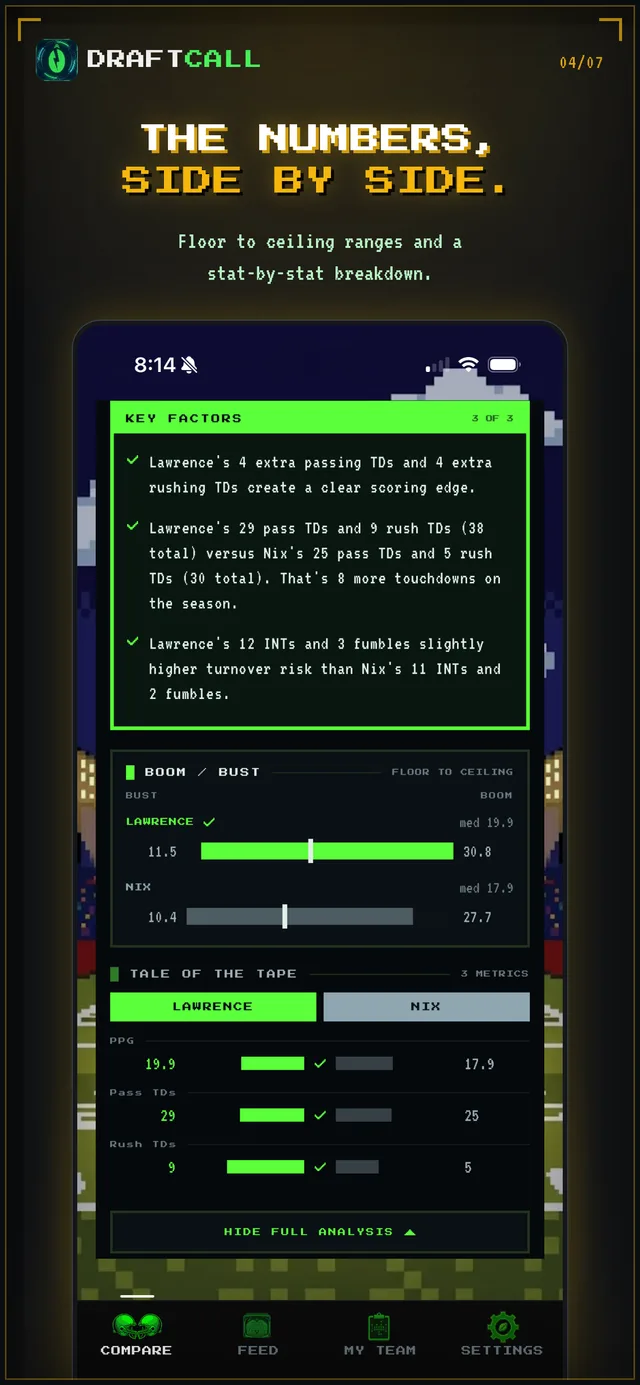
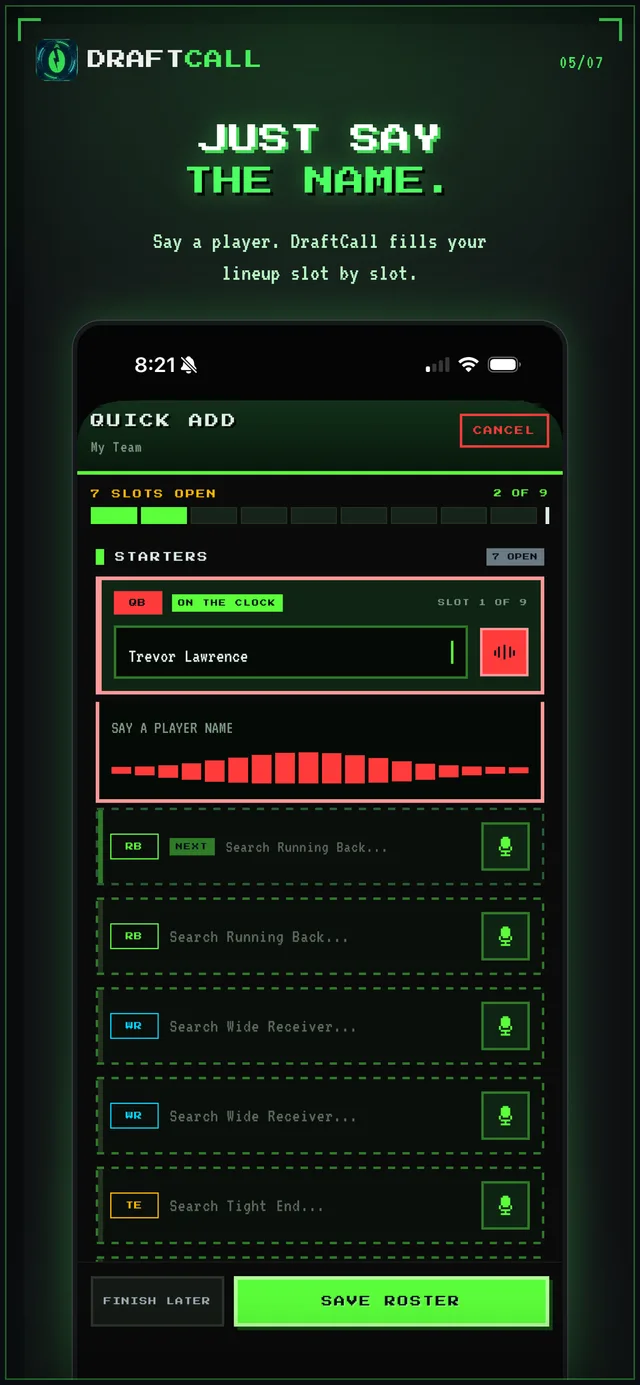
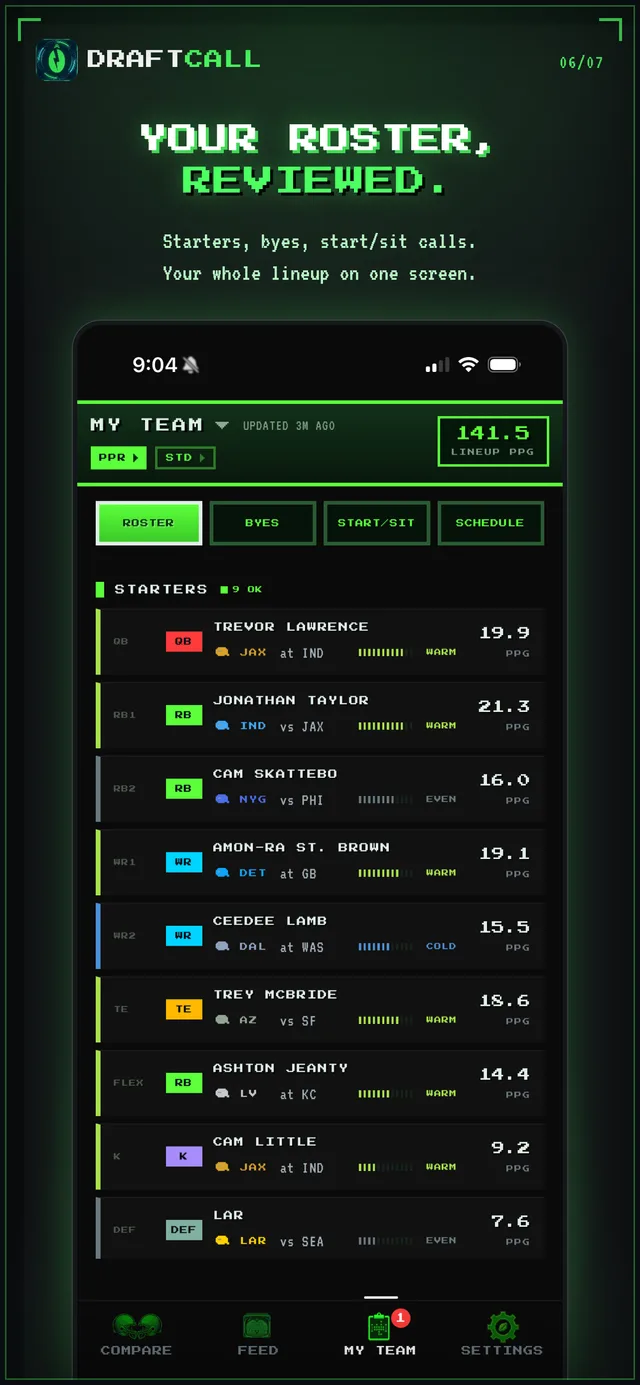
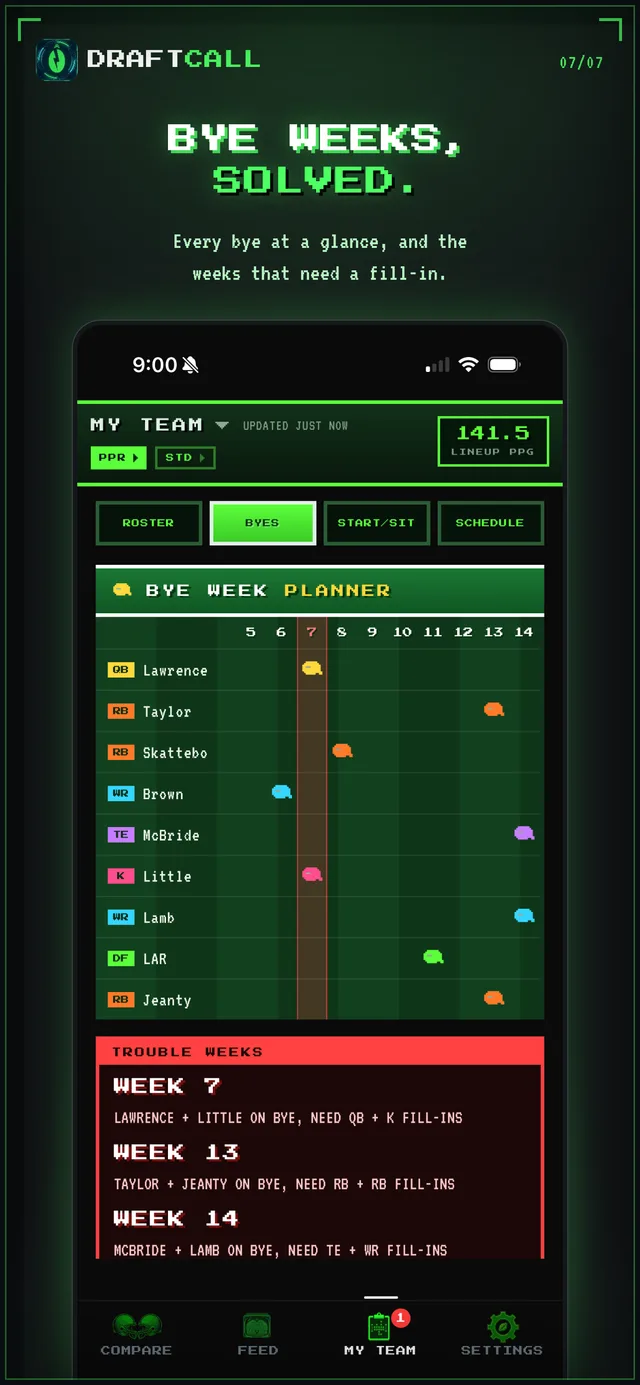
DraftCall's AI comparison engine gives you clear start/sit verdicts in seconds, so the knowledge from this chapter turns into real fantasy wins.

See everything in the app →