

DraftCall
DraftCallFantasy Football
Chapter 3 of 6

Chapter 3 · Fantasy Football 101

How to Draft a Fantasy Football Team

Draft format, positional value, round-by-round strategy, and how to avoid reaches.

The draft is the most important day of your fantasy football season. Every decision you make during those 90 minutes echoes through the next 17 weeks. A great draft gives you a buffer for the inevitable mid-season injuries and bad weeks. A mediocre draft forces you to hustle on the waiver wire all year just to stay competitive.

This chapter breaks down how drafts work, which strategies beginners should start with, and how to avoid the specific mistakes that will haunt your team from Week 1 onward. The good news is that drafting well is mostly about discipline, not expertise — if you can stick to a plan and avoid panic picks, you will finish ahead of the average manager in your league.
Snake drafts vs auction drafts

Most beginner leagues use a snake draft. In a snake draft, the draft order reverses every round. If you pick 1st in round one, you pick last in round two, then 1st again in round three, and so on. This format is designed to balance out the advantage of picking early — the team that picks at pick 12 in round one picks at pick 13 in round two, which is essentially two early-round picks in a row.

Auction drafts are the other main format. Every team gets a budget (usually $200) and bids on players one at a time. There is no fixed order, and any manager can theoretically end up with any player they are willing to pay the most for. Auctions give you more control but require more preparation, and they take longer. New players should start with snake drafts before trying auctions.

Either way, the basic principle is the same: you are trying to assemble the best possible collection of starting players within the constraints of your draft position or budget. Stick to snake drafts for your first few seasons, then branch out.

Positional value — why some positions go first

Running backs have historically gone earliest in fantasy drafts because the position has the shortest supply of workhorse starters. In any given NFL season there are maybe 12-15 running backs who handle three-down workloads, and everyone knows who they are. Miss out on that tier and you are forced to pick from a committee of part-time backs, which means guessing every week which one will get the touches.

Wide receiver depth is significantly stronger. In a typical season there are 30+ wide receivers who can credibly start on a fantasy team. That is why strategies like "Zero RB" (which skips running back entirely in the first two rounds in favor of receivers) have gained traction. The tradeoff: you miss the elite RB tier but have more flexibility at WR later.

Quarterback and tight end should usually wait. In single-QB leagues, there are more startable QBs than starting slots, so you can wait until rounds 8-12 and still get a top-15 producer. Tight end has a clear three-tier system: the elite handful (rounds 2-4), the middle-of-the-pack starters (rounds 8-12), and streamers. Pay up for the elites or wait it out — the middle tier is a trap.

Round-by-round strategy for beginners

Rounds 1-3: This is where you build your foundation. Your goal here is to come out with at least one elite running back and one elite wide receiver. Do not reach for a quarterback or tight end in these rounds unless you are in a TEP or superflex league. Target workhorse backs and alpha receivers — players with a clear path to 300+ touches or 130+ targets.

Rounds 4-7: Fill in your starting lineup. You should leave round seven with a complete starting lineup: a QB, two RBs, three WRs, a TE, a FLEX. The only position you might still be waiting on is a quarterback in a single-QB league. If you have prioritized your starting slots, your bench in the later rounds becomes pure upside hunting.

Rounds 8-12: This is where the biggest hits come from. Look for handcuffs (direct backups to your elite running backs), rookies with ascending roles, and receivers on offenses that should improve. Our preseason sleepers page highlights the best data-driven picks for this range — they are the players most likely to out-earn their draft slot by a round or more.

Rounds 13+: Your last picks should be lottery tickets and handcuffs. Do not draft "safe" here — safe picks are exactly the ones you will drop in Week 3 for a waiver pickup. Target injury returns, rookies with unclear roles, and backup quarterbacks on high-powered offenses. The late rounds are where championships are often won by a single lucky hit.

Mock drafts — why you should do at least three

A mock draft is exactly what it sounds like: a practice draft with no real stakes. Every major fantasy platform lets you run mock drafts against other users or against the computer, and they take about 20-30 minutes each. Doing three of them before your real draft is the single best preparation you can do.

Mock drafts teach you how other managers value players, where tier breaks actually happen, and how your strategy holds up in real time. You will be surprised how often a player you planned to target falls into your lap three rounds later than expected, or how a "consensus" target disappears before you can even sniff him. That calibration is worth everything when the real draft starts.

Pay attention to positional runs during mocks. When three quarterbacks come off the board in a 90-second stretch, that is a QB run, and you either need to jump in or actively plan to wait out the rest. Spotting runs and reacting to them is an intermediate skill that mocks teach you faster than reading rankings articles.

Do not panic, trust your board

The single most common rookie mistake on draft day is panic-picking. Someone drafts a quarterback in round five and you immediately feel like you need to grab one too. Do not. If your board said to wait, wait. Scarcity is usually an illusion manufactured by one or two aggressive managers, not a real shift in value.

Build a tiered cheat sheet before the draft and bring it with you. Tiers — groupings of players with similar projected value — matter more than exact rankings. The difference between the 4th and 8th best running back is usually small. The difference between the 8th and 12th is huge. Draft from tiers, not from rank numbers.

When in doubt between two players at the same tier, pick the one with the safer role. A workhorse running back with an uncertain QB is safer than a committee back with a great QB. A target-dominant receiver on a middling offense is safer than a deep threat on a great one. Floor wins leagues more often than ceiling does, especially for beginners.

Glossary Terms From This Chapter

Website vs App

Put it into action

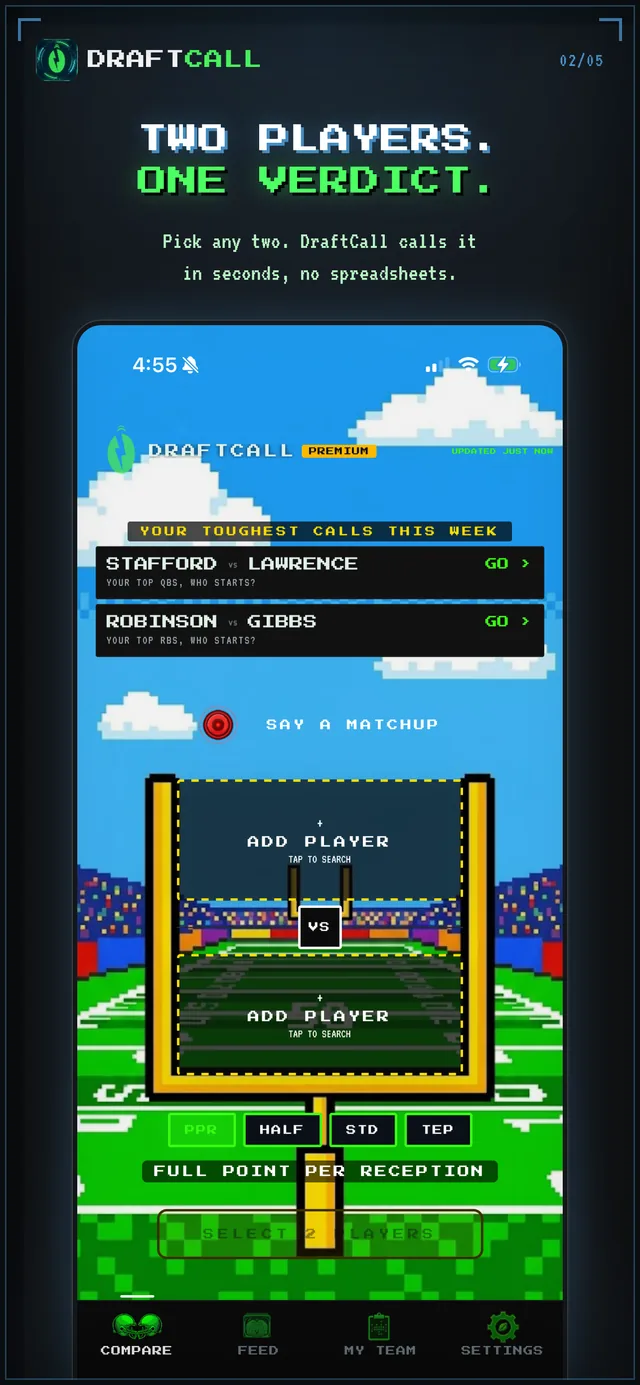
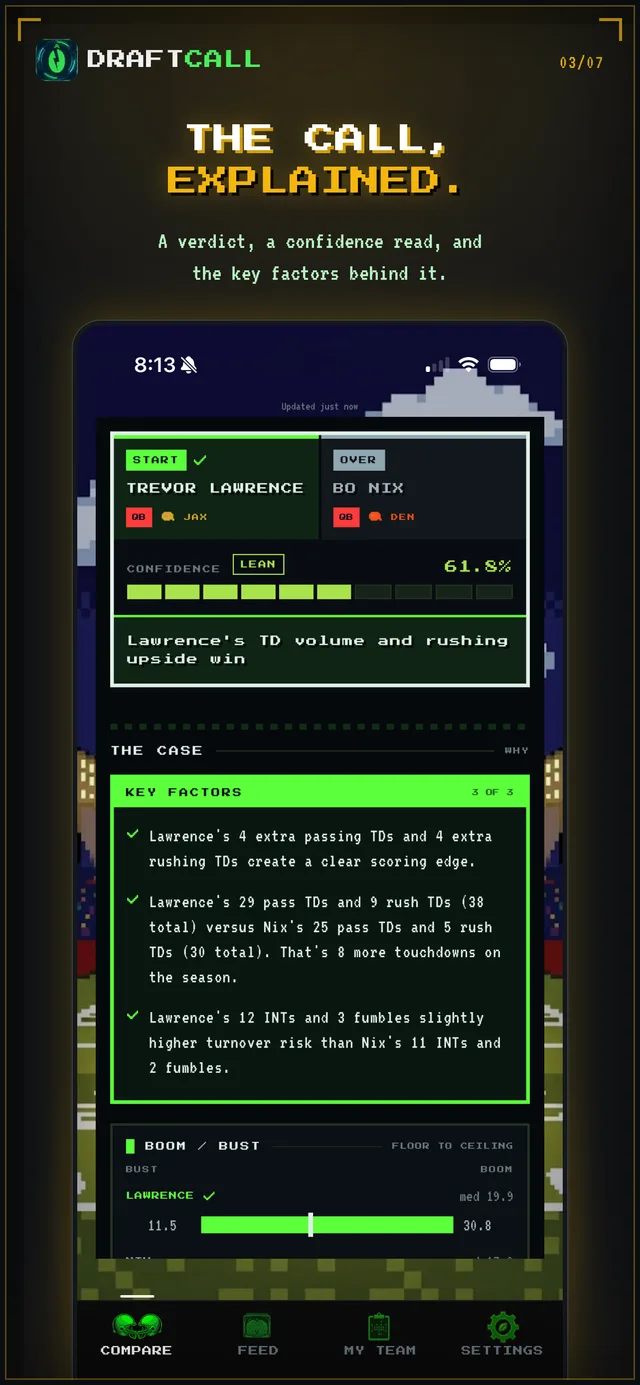
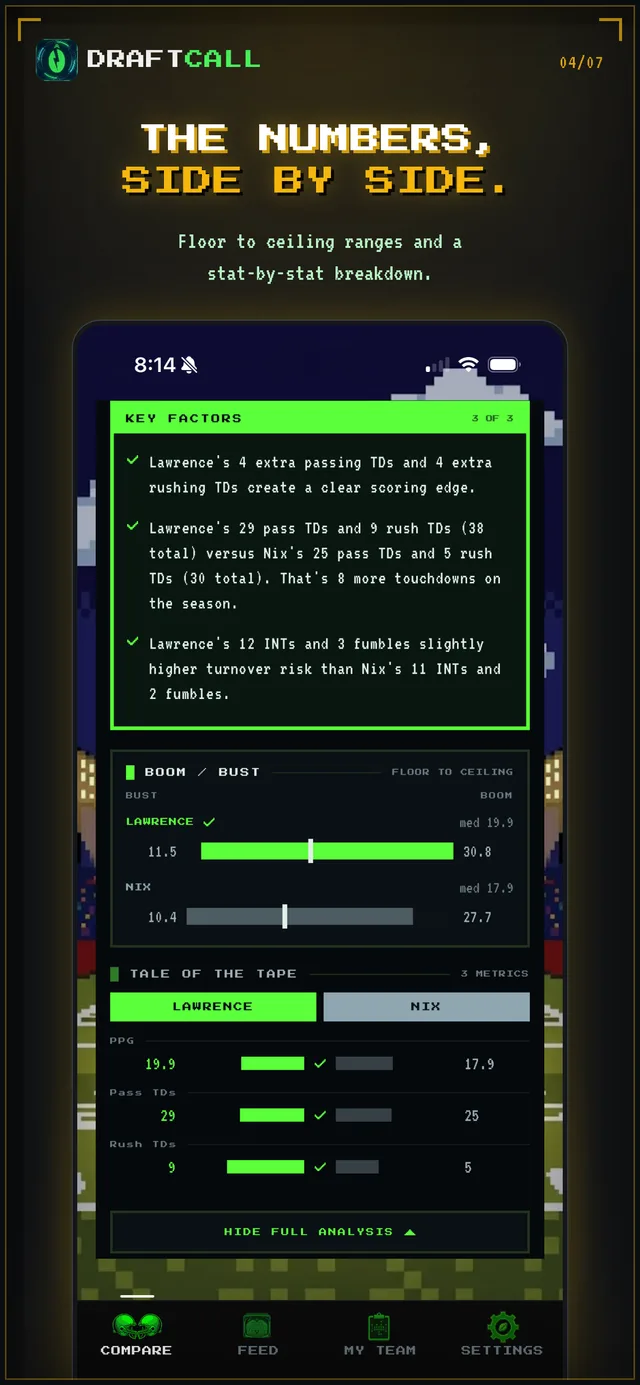
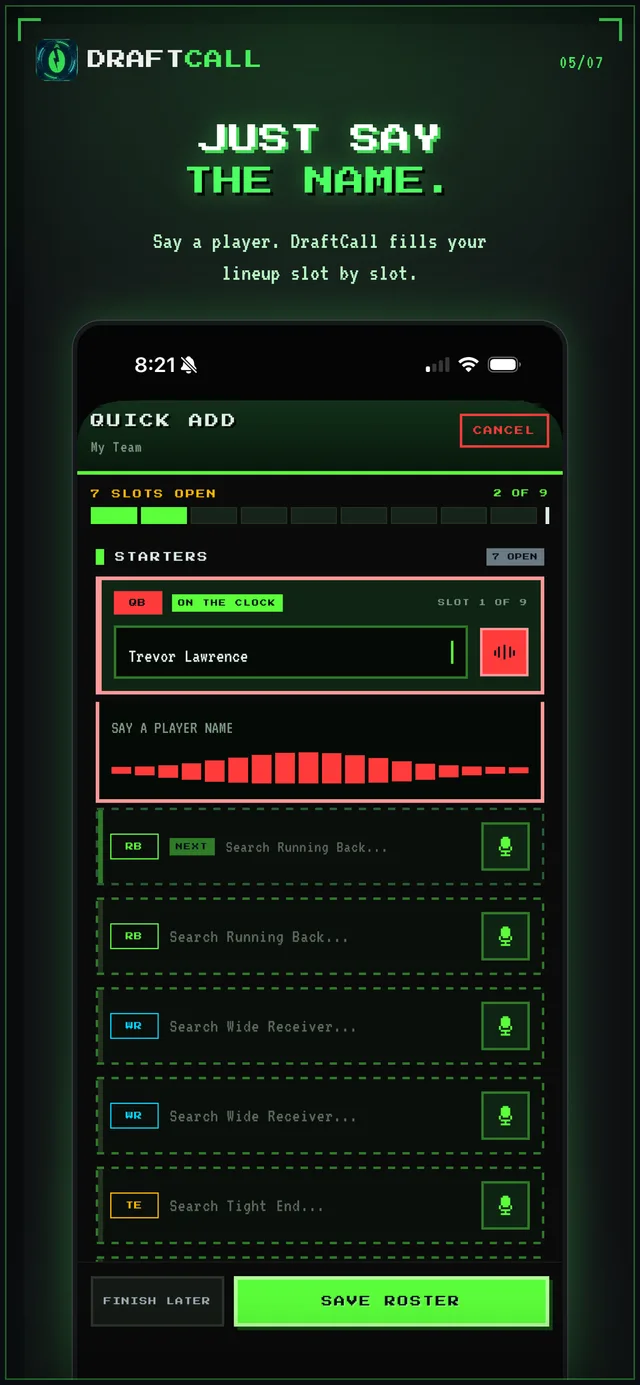
DraftCall's AI comparison engine gives you clear start/sit verdicts in seconds, so the knowledge from this chapter turns into real fantasy wins.

See everything in the app →