

DraftCall
DraftCallFantasy Football
Chapter 4 of 6

Chapter 4 · Fantasy Football 101

Building a Winning Fantasy Roster

Starter slots, FLEX strategy, bench depth, and bye week planning.

A fantasy football roster is more than a list of your best players — it is a puzzle of starting slots, bench depth, positional scarcity, and weekly matchups. The manager who understands that puzzle wins more than the manager who just drafts the highest-scoring names. This chapter walks through the math and reasoning behind a well-built roster so you can think like a fantasy general manager from Week 1.

By the end of this chapter you will know exactly how many of each position to draft, how to approach the FLEX slot strategically, what to do with your bench, and how to plan around bye weeks before they sneak up on you. These are the foundations every manager in your league should be thinking about — and most of them probably are not.
Your starting lineup

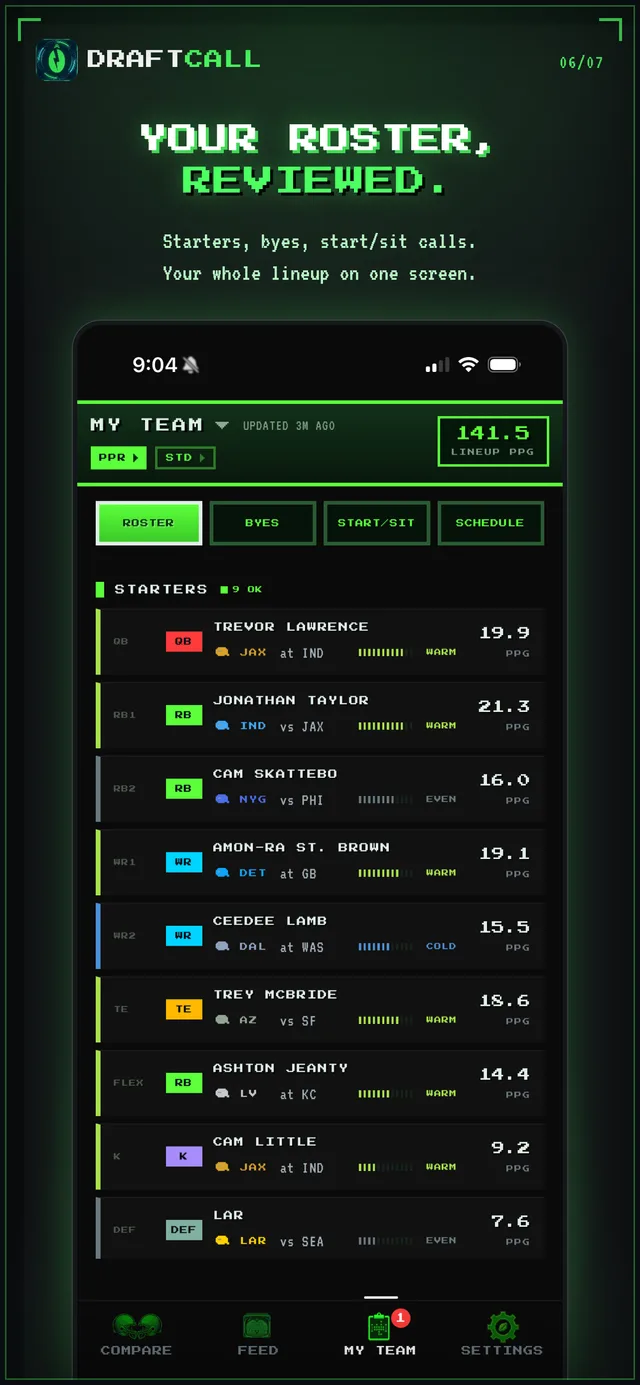
The standard fantasy starting lineup is nine slots: one quarterback, two running backs, two wide receivers, one tight end, one FLEX (any RB/WR/TE), one kicker, and one defense/special teams unit. Some leagues run a 10-slot lineup by adding a second FLEX, and superflex leagues let you start a second quarterback in the FLEX slot. Always check your league's lineup requirements before the draft.

Each of those nine starters scores points for you every week. Your final total is the sum of your nine starters — no bench points count, no "best of both" scoring, just whoever you chose to start. This is the entire game in a nutshell: get your nine best guys on the field every Sunday.

The kicker and defense slots are the least important on your roster. Do not spend a draft pick on them until the last two rounds. The difference between the top-five kickers and the replacement-level kickers is usually less than 20 points over a full season. Same with defenses. Draft them late, stream them based on matchup, and spend your early picks on positions where the tier breaks actually matter.

The FLEX slot — and how it shapes everything

The FLEX is the most flexible slot in fantasy football and the reason you draft so many running backs and wide receivers. Because any RB, WR, or TE can fill the FLEX, you get to decide every single week which position gives you the best matchup. Start the RB against the worst run defense. Start the WR against the worst pass defense. Start the TE if your matchup is bad everywhere else and you have a tight end facing a tight-end-friendly defense.

The math behind the FLEX is simple: more options at RB/WR/TE means more weekly matchup-based choices. If you drafted four legitimate RBs, three WR2s, and a top tight end, you have eight players competing for the five RB+WR+TE+FLEX slots. That depth is insurance against injuries and bye weeks, and it lets you exploit matchups every single week.

Most good fantasy managers end up starting a wide receiver in the FLEX more often than not in PPR leagues. Wide receivers have slightly higher floor than committee running backs, and the PPR bonus on receptions stabilizes their week-to-week output. In standard scoring the math flips — touchdown-dependent committee backs are more attractive because each score is worth more relative to the yardage.

Bench strategy and handcuffs

Your bench is 5-7 players you are not starting but are keeping around for injury insurance, matchup flexibility, and upside hunting. Every bench player serves one of three roles: backup to a starter, weekly rotation piece, or lottery ticket waiting for a role.

Backup running backs are the most valuable bench pieces in fantasy football. If you used a top-four pick on an elite running back, spending a late-round pick on his direct backup (the "handcuff") is the single most defensible roster move in the game. Starting running backs miss time at a rate of roughly 30% over a 17-game season, and when your top pick goes down, having his own handcuff on your bench is the difference between a winnable week and a disaster.

Lottery ticket bench slots are for players who have no current role but a clear path to upside. A rookie running back who might take over the starting job after two weeks. A wide receiver on an offense that is about to upgrade its quarterback. A tight end whose starter is showing signs of decline. These bets do not all pay off, but one or two hits per season is usually what separates the league winners from the middle of the pack.

Bye week planning

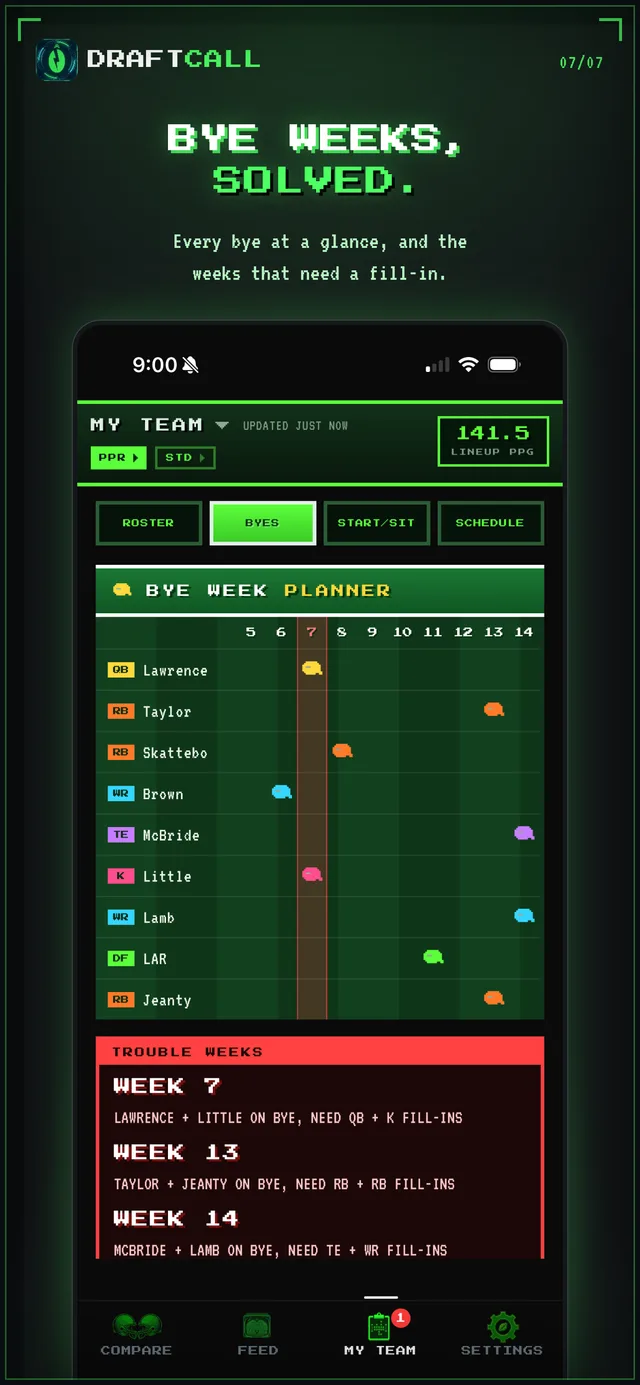
Every NFL team has one off week during the regular season where they do not play. Any player on that team scores zero fantasy points in his bye week. If you accidentally stack your entire roster with players on the same bye week, you are guaranteeing yourself a brutal Sunday at some point during the season.

Good managers plan for byes before they happen. When you draft a player, look at his bye week and compare it to your existing roster. If four of your starters share a Week 10 bye, you have a real problem on Week 10 — unless you have a plan to pick up fill-ins from waivers the week before.

At the running back position specifically, bye weeks interact with handcuffs in a painful way. If your RB1 and his handcuff share the same bye (which they will, because they play for the same team), you lose both on the same Sunday. Draft a second RB or a high-upside flex option on a different bye to hedge.

Roster balance — do not hoard one position

A balanced roster looks something like this: two quarterbacks (one starter, one streaming backup in single-QB leagues), five or six running backs, six or seven wide receivers, two tight ends (or one elite plus a streamer), one kicker, one defense. Those numbers add up to 17-19 players, which matches most league roster sizes.

The temptation for new managers is to hoard one position after a good draft. If you landed three elite running backs in the first five rounds, you might feel like you should keep drafting running backs to press the advantage. Do not. Running backs get hurt. Wide receivers are scarce. Tight ends go through matchup droughts. Balance is what gets you through a full season without having to trade from weakness.

The exception is early in the draft when you have a clear tier break. If you are picking at 1.12 and three elite running backs fall to you at 1.12, 2.01, and 3.12, you take all three. Tier-based drafting trumps positional balance when the value is obviously there. Just be ready to trade from that surplus once the season starts and the league's needs become clear.

Glossary Terms From This Chapter

Website vs App

Put it into action

DraftCall's AI comparison engine gives you clear start/sit verdicts in seconds, so the knowledge from this chapter turns into real fantasy wins.

See everything in the app →